Redefining our ideology and understanding our true value
Much has been said about the mystic Africa, a blessed paradise flowing with milk and honey. Thanks to the voyage of the courageous Portuguese in the 15th century which led to the discovery of a unique land body, a distinctive populace was birthed.
Without any bias, the land has undergone a sustained stream of changes that has continually shaped and modeled the life of its inhabitants. Having survived wars, natural disasters, pandemics, and other problems that periodically plague human existence, Africa still stands gallant without any blemish.
Blessed beyond all unreasonable expectations, Africa boasts of a soil fertile for agriculture of all kinds, is endowed with mineral resources, boasts an impeccable climate and pristine land topography, and is empowered by a young energetic population that has a thorough blend of rich cultural heritage. With all these qualities, the uniqueness lies in the beauty, warmth, and true hospitality of its people. Many still get stuck trying to unravel the fact of how a populace could have so much in abundance. It’s never been in doubt that Africa is indeed rich in all that it could imagine.
A critical look on the horizon reveals the steady growth and positive upscale of Africa in all sectors. For a continent that trailed for the majority of its existence and only started to evolve properly within the last millennium, it’s fair to say that it’s done well. The majority of African countries became independent in the mid-1900s and of truth had to embattle the characteristic challenges that accompany sovereignty. Having to stretch out its little wings and fly post-independence was a challenge faced by all African nations. Times have rolled past and now the continent is experiencing rapid growth in diverse sectors like agriculture, education, healthcare, finance, infrastructure, and technology.
Irrespective of the challenges we have faced or continue to face, we must begin to see ourselves as a privileged species. We go through these challenges and it builds our identity and resilience. As we continue to grow and develop, more challenges tend to erupt and they can only be stepping stones towards a brighter future. The wars, the hardships, the economic sabotage, and the inefficacies of the government have in one way or another propelled us to find unconventional and innovative solutions that have improved our living conditions and drawn us closer to becoming a global haven.
I strongly believe that we must begin to recognise the God-given abilities we possess and be aware of the unique qualities that give us a comparative advantage as global species. We must begin to see ourselves as knowledgeable and capable enough to dictate and implement how we operate. The structures that need to be put in place for us to achieve productivity must be willingly set up by us all. The ideology shift to switch to producers who attain self-sufficiency and become global exporters is a positive narrative as well as a new awakening. It is point blank to all that being the world’s leading labour force avails us a unique advantage that means we can have it all stem from our motherland.
Fellow compadres, awaken and alight from your slumber, the dark days are over. Arise and conquer the future!!!
The glitz, the glamor and flashy lifestyle, these and many more are what we see when we look at pro footballers or athletes. It’s a career that many will dream and strive to have. However, according to idsoccer only 0.012% go on to become pros. For a career that is lucrative and adored by many, the success rate figures leaves one to wonder what’s really involved in becoming a professional footballer.
Article by Williams Ochu in Collaboration with Deez Graphics& Studioz
Let’s cast the spectrum on Africa, a rapidly developing continent which is known for producing world class footballers. We try to focus and envisage what it really takes to become a pro footballer in Africa against all odds. It is one thing to go pro and play on the continent and it’s another to come from Africa and be opportuned to play on the global stage. The desire to play overseas by african sporting prospects lives rent free in the heads of many. This leaves us to wonder how a continent which cannot compete globally in terms of infrastructure and economy be able to produce elite footballers who go on to achieve god-like status and inspire the lives of many around the globe. The training methods and financial commitments invested in scouting and nurturing sports talent in developed countries cannot be equated to what is done in Africa, yet we stand strong. Seeing the current impact by African footballers on the global stage, one tends to imagine how much more impactful it would have been were more African talents been able to lace their boots at that level. This leaves us with only one definite answer to this dilemma; Africa is indeed blessed with football heritage.
Global football has emerged and Africa currently plays catch-up just as it does in other industries. Struggling to adopt current trends, new practices and refined procedures is what stalls progress. We live in a continent where football talents are still scouted only based on natural ability, a continent that still sticks to old deprecated methods for player development and where there is still a significant knowledge depth on what it takes to become a pro footballer. Walking along the streets in various african cities you will see the rich football culture being demonstrated literally everywhere by lots of the younger generation. I believe it’s high time we begin to spread the word and change the ideology around which football is built on the continent.
For a young baller on the continent aspiring to go pro, he or she needs to first understand that pro football is more than a hobby. It’s a career, a dedication and a calling. To get started, you need to be aware of the industry you are about to build a career in. You must sit down and ask yourself, what are the pros of this career, what are the cons, what do I need to do to get in, what are the risks it poses and am I really ready to embark on this journey of an unknown uncertainty. All these should be deeply pondered on before the thought of going pro should be nurtured. Should you provide answers to all these questions, then you must begin to model your mindset towards a high paced industry. An industry that promises high remuneration but high performance and dedication to match the remuneration (to whom much is given, much is to be expected).
As an aspiring professional you need to understand that talent is not enough to make it to the big stage. Talent is key to stand out at the grassroots and propel you to the next step, however to go pro goes beyond talent. To go pro there’s a need to stand out, to showcase the business side as well as the football side of you, to show you understand the demands of the career you’re getting into, to show you have the resilience and grit to fit into the 0.012 percentile. As the popular saying connotes, luck does not exist in this field, there only comes a moment when talent meets opportunity
What young ballers do not know
The day you decide to give pro football a shot, you literally choose to have a career in the sports and entertainment industries. The word entertainment might sound vague when used in this context, however there’s no football without entertainment. The reason why football is able to generate billions of revenue and draw together large polls of spectators is because it entertains its viewers. The administrators are concerned on how to pull crowds, market the game to get more sponsors and serve exciting football games to keep spectators spellbound. This is what brings in the revenue used to fund and sponsor the flashy lifestyle of pro footballers. An aspiring talent has to know that pro football is more than an entertaining activity. It’s a journey towards fulfilling a burning passion and desire. However, brilliant it may seem, the path posses way too many uncertainties
The industry you should understand
Just as it is with the entertainment industry, for a pro footballer you need to be managed and represented by an agency or a body. There is no direct link with grassroots talent and the professional stage. No matter the method you got scouted from, you will have to be managed and represented. The industry is highly commercialized with lots of off the field activities. The legal team or agency helps you manage the professional aspect of the career while you focus and channel your talents towards meeting deliverables on the pitch
The first rule of thumb is to be knowledgeable about how sports management agencies operate, what are the laws governing them, what are the laws of relationships as stipulated by football’s governing body, what are their philosophies, where and how do they recruit talent, what are their contract and binding terms and how much leverage can you get. You need to first understand these and other related info before attending scouting programs, before signing any pre contract or listening to any agent of sort. Those who know the industry well enough would tell you that the length to which you can go in this industry heavily depends on how you’re managed.
What we must know and do to strive for professionalism
Showcasing African talent requires both personal and group efforts. Sports management agencies have their ways of showcasing players, however players who have not yet had such a breakthrough need to position and properly brand themselves to be seen and get snapped up
Being fit is a “MUST”
= Physical fitness as a way of life
The demands of modern day football sees the athlete being built to perform like a tank. The constant gym activities, need to build muscles, need to maintain a healthy diet, need to develop a regular sleep pattern are what upcoming athletes are not exposed to. It’s a career with strict discipline. The willingness to give up personal lifestyle and hobbies to follow an organized living routine is a herculean problem faced by aspiring ballers.
When on the hunt for opportunities, the aspiring athlete has to maintain max fitness levels required by pro athletes. To be able to showcase your talents when an opportunity comes knocking ensures you maintain the required physical levels at all times. This is a challenge faced by aspiring ballers on the continent as they are unaware of these demands. They are not aware of the levels of pro football and they tend not to put in the required workrate.
= Prioritize self development
21st century football is built on tactics and systems of play. Although boring and uninteresting, tactics is the backstage behind the magical displays we see on the pitch. The development of several systems of play has seen the game progress to high standards. In Africa there’s little or no adoption of modern day tactics. The local coaches still drill players based on legacy and outdated coaching systems. The legacy systems tend to cater for the physical demands of football rather than the tactical aspects. This has hampered the growth and development of aspiring African talents as it incapacitates them when compared to foreign counterparts. There is need for aspiring athletes to begin to prioritize personal training routines as well as begin to familiarize themselves with modern day football tactics. Thanks to global penetration of the internet, there’s more than enough resources to get started with. Personal development should be a burden borne by all aspiring ballers to get them up to speed with the current demands. In life you tend to improve faster when you practice and learn in your little corner.
= Preparing your CV with video analysis
Aspiring footballers need to begin to wear a professional hat. Previously, they were not aware of the need to appear professional. It’s good to note that when starting out, aspiring ballers need a rich CV which details their career experience so far and should be backed up by video analysis. There’s a need to invest in well documented video analysis for a player. This aids in easily publicizing the player and showcasing their strengths to potential scouts and management agencies. A footballers CV represents him before an audience without need for his physical presence. It has to be well curated to speak for the player. It’s a necessity for an aspiring athlete.
= Data collection and collation
Data plays an important role in modern day human lives. It’s a proof of talent as well as a proof of ability to get things done. In Europe there is massive involvement of data in the recruitment of players. Even with the huge dependence on data by modern day teams, clubs still struggle to recruit worthy talents, this now leaves us to ponder how it would have been if there was no use of data. Aspiring talents find themselves in teams where there is no data collection of any sorts, this is harmful to progress. Due to the unprofessional way in which grassroot football is conducted in Africa, records and official statistics are not properly curated, there is no continuous follow up or pattern to ease players unto higher levels, there is no way to ascertain what training methodologies aspiring players have worked under. This greatly hinders the recruitment of African players across the globe. The panacea for this is to remodel the way grassroot teams operate. Introduce technology into the development and training of players. Effectively collate, store and analyse player data to know how best to structure their development
= Paid advertising
Exerting concerted effort towards putting oneself out there is one of the biggest shows of resilience and perseverance. With access to the internet and the wide array of communication tools at fingertips, aspiring ballers have to begin to consciously leverage these tools for better productivity. Showing off one’s personal drills, fitness levels, and healthy lifestyle in a professional manner goes a long way to reach agents around the globe. Social media platforms can be leveraged to promote talent. In other industries such as music, and movies, targeted ads are run via social media platforms such as instagram, snapchat and X to promote artists, movies and products. Developers and freelancers also leverage ads on such platforms to promote themselves. In return aspiring ballers can leverage such ad platforms to boost their publicity. These ads can be targeted to run in specific demographics and will be visible to lots.
Beyond all unforeseeable doubt, African talents have dominated the world’s game. Football has eras, and times come and go alongside different philosophies of the game. There was once an era that relied on supreme physical strength and player body size, then the use of long balls, then came the tiki taka era of the spanish maestars. Then we ask, what is the next era to unfold?. Well for now we cannot distinctively say, however if we critically take a look at the demands of modern football, we all agree that we are in an era that demands massive athleticism to keep up with. The frantic schedule and the physicality of play demands that ballers be ready to maintain premium physique levels while balancing it alongside superb technical ability. I believe these perks favour aspiring african ballers. We have strong bones, well built muscles and the ability to work like a tank. It’s high time we arise and adopt global trends, there is more exposure and development tailored towards the game now more than ever before.
If we begin to do what is right, our God given ability will show forth and we can go on to conquer the world’s game. The successes of countries like France, Belgium, Netherlands and a host of other foreign countries who have a bunch of players with African descent representing them at international level is a testament to the fact that if the right methods are implemented, African talent stands to dominate the global game and it brings the continent way much closer to conquering football’s most coveted trophy; the FIFA World Cup
Strategic brand positioning in the African Fintech industry requires understanding the unique needs and challenges of the market. Here are some insights:
Understand the Market: Research the demographics, financial behaviors, and pain points of your target audience. Tailor your messaging to resonate with their specific needs.
Leverage Technology: Highlight the technological advantages of your solutions, such as mobile accessibility, security features, and ease of use. This can differentiate your brand in a competitive landscape.
Build Trust: Trust is crucial in fintech. Establish credibility through transparency, customer testimonials, and partnerships with reputable financial institutions.
Cultural Relevance: Ensure your branding and marketing strategies are culturally relevant. Use local languages, symbols, and narratives to connect with consumers on a deeper level.
Focus on Financial Inclusion: Position your brand as a champion of financial inclusion. Offer solutions that cater to underbanked populations and promote financial literacy.
Adapt to Regulatory Changes: Stay informed about the regulatory frameworks affecting the fintech sector in Africa. Being compliant can enhance your brand’s reputation and reliability.
Utilize Social Media: Engage with your audience through social media platforms. Share educational content, updates, and success stories to build a community around your brand.
By focusing on these areas, you can effectively position your brand in the African fintech landscape.
Your Brand on a Book by Deez graphics & Studioz
To access more articles like this or to collaborate on a project, reach out to us via our contact details below 👇
Marketing is a comprehensive process that involves the activities and strategies used by businesses to promote and sell their products or services to consumers. It encompasses a wide range of functions, including market research, advertising, sales, distribution, and customer service.
At its core, marketing aims to understand consumer needs and preferences, create value, and build strong relationships with customers. Here are some key components that define marketing:
Market Research
Product Development
Promotion
Distribution
Sales
Customer Relationship Management
Branding: which is the major focus of this post, includes creating a strong brand identity that resonates with consumers, differentiates the business from competitors, and fosters trust and recognition.
Marketing is a multifaceted discipline that integrates various strategies and activities of which the most crucial is BRANDING. Branding creates an avenue to understand consumer behavior, create value, and drive business growth. It is essential for connecting businesses with their target markets and achieving long-term success.
Branding as a Concept
Branding is often considered the backbone of a business’s identity and growth strategy. Here are several reasons why it may be the most important part of your business growth:
1. Differentiation in the Market: In today’s competitive landscape, a strong brand helps distinguish your products or services from those of competitors. A unique brand identity, including a memorable name, logo, and messaging, allows consumers to recognize and choose your offerings over others. This differentiation is crucial for attracting and retaining customers.
2. Building Trust and Credibility: A well-established brand fosters trust and credibility among consumers. When customers recognize a brand and have positive associations with it, they are more likely to make purchases and remain loyal. Consistent branding across all platforms, from packaging to social media, reinforces this trust and encourages repeat business.
3. Emotional Connection with Consumers: Effective branding goes beyond just visuals; it creates an emotional connection with your audience. Brands that resonate with consumers on a personal level can evoke feelings of loyalty and attachment. This emotional bond can lead to increased customer retention and advocacy, as satisfied customers are more likely to recommend your brand to others.
4. Enhanced Perceived Value: Strong branding can elevate the perceived value of your products or services. When a brand is associated with quality and reliability, consumers are often willing to pay a premium. This perceived value can significantly impact your profit margins and overall business growth.
5. Streamlined Marketing Efforts: A clear and consistent brand strategy simplifies marketing efforts. When your brand identity is well-defined, it guides your marketing messages, visuals, and campaigns. This coherence not only strengthens brand recognition but also makes it easier to target and engage your audience effectively.
In conclusion, branding is not just a superficial aspect of a business; it is a fundamental component that influences customer perception, loyalty, and ultimately, growth. Investing in a strong brand can yield significant returns, making it one of the most critical elements of your business strategy.
Key Components of Branding
Key components of branding include:
Brand Name: The name that identifies a product or company, which should be memorable and reflect the brand’s essence.
Logo: A visual symbol or design that represents the brand, making it easily recognizable.
Tagline: A short, catchy phrase that encapsulates the brand’s mission or value proposition.
Brand Voice: The tone and style of communication used in marketing materials, which should resonate with the target audience.
Brand Values: The principles and beliefs that guide the brand’s actions and decisions, influencing how it connects with customers.
Brand Experience: The overall impression that customers have when interacting with the brand, including customer service, product quality, and marketing efforts.
In essence, branding is about creating a distinct image and perception that resonates with consumers, fostering trust and loyalty over time.
Making Your Brand Memorable
Several factors contribute to making a brand memorable:
Unique Identity: A strong and distinctive brand identity, including a memorable name, logo, and design, helps consumers easily recognize and remember the brand.
Consistency: Consistent messaging and visual elements across all platforms and marketing materials reinforce the brand’s identity and values, making it more recognizable.
Emotional Connection: Brands that evoke emotions or resonate with consumers’ values and beliefs tend to be more memorable. This can be achieved through storytelling, relatable experiences, or shared values.
Quality Products or Services: Delivering high-quality products or services consistently builds trust and loyalty, making customers more likely to remember the brand positively.
Engaging Marketing: Creative and engaging marketing campaigns that capture attention and create memorable experiences can leave a lasting impression on consumers.
Customer Experience: A positive customer experience, from the first interaction to post-purchase support, can significantly enhance brand recall and loyalty.
Social Proof: Testimonials, reviews, and recommendations from others can reinforce a brand’s credibility and make it more memorable to potential customers.
Combining these elements effectively can create a lasting impression in consumers’ minds, ensuring that the brand stands out in a crowded marketplace.
INTRODUCTION The food industry In Africa is a vital sector that encompasses various aspects from Agriculture to food processing & distribution. Africa’s diverse agricultural landscape contributes to a rich variety of crops, livestock & culinary traditions across the continent. According to the Food and Agricultural Organization of the United Nations (FAO), the African food industry has been steadily growing, with focus on increasing agricultural productivity, improving food security, and promoting sustainable practices. The continent’s agricultural sector employs a significant portion of the population and plays a crucial role in ensuring food availability and economic stability.
Reports from organizations like Mintel highlight the emerging trends in Africa’s food and drink sector, including the rise of urbanization, changing consumer preferences, and a growing Demand for healthier and sustainably sourced products. This shift towards modernization and innovation presents opportunities for investment and development in food processing, packaging and distribution industries. The food industry in Africa presents a compelling investment opportunity for potential investors looking to tap into the continent’s growing market. Financial statistics indicate that Africa’s food industry is on a positive trajectory, driven by factors such as population, growth. Urbanization, and changing consumer preferences.
The Market
Market Size
Africa’s Food and beverage sector, has been experiencing steady growth, with an increasing demand for diverse and high quality food products. The continent’s rising middle class is driving consumption patterns towards premium and healthier food options, creating a demand for innovative and value added products. Revenue in the Africa food industry amounts to US $5.95 billion in 2024. The market is expected to grow annually by 5.15% (CAGR 2024-2031).
Countries like Nigeria, South Africa, and Kenya are among the leading countries in the African food market. Nigeria is known for its diverse food culture and large population, making it a significant market. South Africa has a well-developed food processing industry, and Kenya is known for its agricultural exports and innovative food products. The Food sector of the Nigerian economy from 2016-2024 has contributed approximately 23.5% towards the country’s Gross Domestic Product (GDP). That of South Africa has reportedly garnered a 10% increase in revenue, reaching ZAR 34.9bn and is expected to reach US$ 29.93billion in 2024. The Kenyan food sector on the other hand generates an annual revenue of US$50.75 billion as of 2024.
According to the African Food Development Bank (AFDB) , with a 60% of the worlds unused arable land , Africa has an enormous potential for Agricultural production.
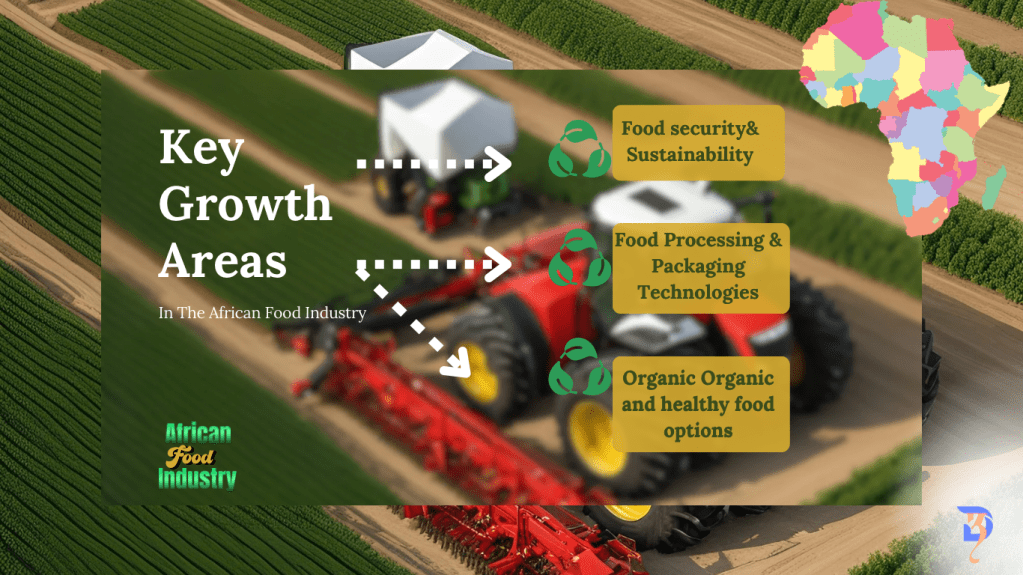
Key Growth Areas in the African Food Industry
Key growth areas in the African Food industry include: • The rise of innovative food security • Increased Focus on food sustainability • The expansion of food processing and packaging technologies • Growing demand for organic and healthy food options.
Key investment areas in the African Food Sector
These areas present significant opportunities for further development and investment in the African food sector.
Innovative Food Products & Agri-Ventures to Invest in Africa.
some examples of innovative food products include moringa-based products, such as moringa powder and moringa energy bars, which are known for their nutritional benefits. Additionally, there are unique snack products like plantain chips and baobab fruit snacks that cater to both local and international markets. These innovative food products showcase the rich diversity and creativity withing the African food industry
Here are some other profitable ideas to consider:
Avocado Farming: This is highly lucrative due to its popularity in both local and international markets. Avocados thrive in warm climates with well-drained soils. Networking with export companies can boost profits significantly.
Tomato Farming: Fresh tomatoes are in high demand locally and internationally. Consider greenhouse farming to control the growing environment and extend the growing season. Drip irrigation and organic fertilizers enhance yields.
AgriTech Ventures: Leveraging technology to enhance agricultural productivity and reduce post-harvest losses is a promising area.
Climate Change Adaptation: Investing in climate-smart solutions, such as solar-powered crop irrigation systems and crop insurance, can address natural disasters like droughts and floods.
Pineapple Industry: West Africa’s pineapple industry offers business opportunities, especially in Nigeria, Ghana, Benin, Côte d’Ivoire, and Togo. Fresh pineapple exports to the European Union have been profitable.
Value Addition and Agro-Processing: Explore processing and adding value to agricultural products. This includes food processing, packaging, and creating by-products.
Remember that consistent care, market strategies, and staying informed about best practices are essential for success in agribusiness. Feel free to explore these ideas further and find the right fit for your investment goals!
Leading Trends in Food Processing in Africa.
Food Processing in Africa is evolving towards more sustainable practices, increased use of technology in processing methods, and the development of value-added products has played a key role in this sector. There is a growing emphasis on improving food safety standards and implementing efficient processing techniques to meet the rising demand for processed foods in the region. Additionally, the focus on traditional and indigenous food processing methods is gaining traction, contributing to the preservation of cultural heritage while meeting modern demand standards.
Traditional food processing methods in Africa often involve manual labor and rely on natural elements like sun, smoke and fermentation for preservation. While these methods have cultural significance and often result in unique flavors, they can be time-consuming and less efficient compared to modern techniques.
Modern food processing methods on the other hand, utilize technology and machinery to streamline processes, increase efficiency, and ensure consistency in quality and safety standards. Additionally, modern techniques often focus on EXTENDING SHELF LIFE, enhancing nutritional value, and meeting higher production demands. Some modern techniques in food processing include: Freeze-drying, vacuum packaging, and high pressure processing. These techniques can help elevate the African food processing sector by improving food safety, extending shelf life, and maintaining the nutritional quality of products. Vacuum processing for example, offers several benefits in food processing. It helps in extending the shelf life of products by removing oxygen from the packaging, which reduces the growth of bacteria and mold. By incorporating these modern methods, African food processors can enhance the quality and marketability of their products, making them more competitive both in the local and international market. Both traditional and modern methods have their advantages and are valued for different reasons in the food industry.
Distribution Channels in Africa’s Food Industry.
Distribution channels within the African food industry exhibit variability based on the specific region. Common channels encompass:
Traditional Markets Supermarkets Wholesalers Distributors Online platforms Direct sales from producers to consumers These channels serve a pivotal role in efficiently bridging the gap between food producers and end consumers. Each channel presents unique advantages and challenges, influencing the trajectory of food products to the market and consumers.
Regulatory Framework in the African Food Industry
In the African food industry, the regulatory landscape is defined by the Africa Union (AU) instruments. These legal frameworks encompass treaties, resolutions, declarations, statutes, and policy papers that govern food regulations continent-wide.
Moreover, sub-regional economic communities, such as the East African Community, ECOWAS, COMESA, and SADC, have established their legal frameworks pertinent to food and agriculture.
Consumer Behavioral Patterns to Note in The African Food Industry.
Consumer behavior patterns in the African food industry are influenced by a variety of factors, reflecting the continent’s diverse cultures, traditions, and economic conditions. In Africa, consumer behavior in the food industry is shaped by a mix of traditional preferences, changing lifestyles, and emerging trends.
Traditional Preferences: African consumers often have strong ties to traditional foods and culinary practices. For example, in Nigeria, the consumption of local staples like cassava, yams, and plantains remains prevalent due to cultural significance and taste preferences. These traditional foods hold a special place in the hearts of consumers and continue to drive consumption patterns.
Changing Lifestyles: Urbanization and modernization are impacting consumer behavior in the African food industry. As more people move to urban areas and adopt fast-paced lifestyles, there is a growing demand for convenience foods and ready-to-eat meals. This shift is evident in the rise of fast-food chains and the popularity of packaged snacks in many African countries.
Health and Wellness Trends: Health-conscious consumer behavior is gaining momentum in Africa, mirroring global trends. Consumers are increasingly seeking healthier food options, including organic, natural, and minimally processed products. For instance, the demand for fresh fruits and vegetables, as well as organic food products, is on the rise in markets across the continent.
Economic Factors: Economic conditions play a significant role in shaping consumer behavior in the African food industry. Price sensitivity is a key factor influencing purchasing decisions, particularly in lower-income segments of the population. Consumers often opt for affordable food options, leading to the popularity of street food vendors and informal markets offering budget-friendly meals.
References and Examples: Studies such as the “African Food and Beverage Market Report” by Euromonitor International provide valuable insights into consumer behavior patterns in the African food industry. For example, the report highlights the growing demand for convenience foods and the impact of urbanization on consumer preferences across the continent. Additionally, case studies of successful food businesses like Shoprite in South Africa or Jumia Food in Nigeria offer practical examples of how companies adapt to consumer behavior trends in the African market.
By understanding these consumer behavior patterns and trends, businesses in the African food industry can tailor their products, marketing strategies, and distribution channels to effectively meet the needs and preferences of diverse consumers across the continent.
Recommendation For Positioning
In the bustling world of the African food industry, positioning your brand strategically can make all the difference. Crafting a unique identity and understanding the market dynamics that we have stated above are essential steps towards success. Below is a guide to assist you stand out as a startup in this bustling marketplace:
Embracing Diversity: Africa’s rich cultural tapestry reflects in its food industry. Embrace this diversity by incorporating authentic flavors and traditional recipes into your brand. Celebrating the uniqueness of each region’s cuisine can resonate with consumers and set your brand apart.
Quality and Innovation: In a competitive market, quality and innovation are key differentiators. Focus on sourcing high-quality ingredients, adopting sustainable practices, and innovating with new product offerings. By staying ahead of trends and meeting consumer demands, your brand can establish a reputation for excellence.
Consumer Engagement: Understanding the evolving preferences of consumers is vital. Leverage social media platforms and engage with your audience to build a loyal customer base. Listen to feedback, respond to inquiries, and create interactive campaigns to foster a strong brand-consumer relationship.
Collaborations and Partnerships: Collaborating with local producers, chefs, or influencers can amplify your brand’s visibility. Partnering with like-minded businesses or organizations can open new avenues for growth and create mutually beneficial opportunities within the industry.
Market Research and Adaptability: Stay informed about market trends, competitor strategies, and regulatory changes. Conduct thorough market research to identify gaps and opportunities for your brand. Remain adaptable and willing to evolve your brand strategy to meet the dynamic demands of the African food industry.
By implementing these strategies and staying true to your brand’s values, you can navigate the African food industry with confidence and carve out a distinctive space for your brand. 🌍🍽️ #AfricanFoodIndustry #BrandPositioning #CulinaryExcellence
Conclusion
In conclusion, Africa’s food industry is a dynamic and evolving sector that combines traditional practices with modern innovations, reflecting the continent’s rich culinary heritage and potential for growth and development. By addressing challenges such as food security, sustainability, and market access, Africa’s food industry can continue to thrive and contribute to the continent’s economic prosperity.
References
References:
FAO. (2022). The State of Food and Agriculture in Africa. Food and Agriculture Organization of the United Nations.
Mintel. (2023). Africa Food and Drink Trends. Mintel Reports.
Adebayo, K. (2021). Agriculture and Food Security in Africa. Springer.
This Report is sponsored by DEEZ GRAPHICS & STUDIOZ
In 2025, the average cost of branding continues to be a crucial consideration for businesses, especially startups looking to establish a strong brand presence in the market. The investment required for branding encompasses various elements such as logo design, website development, marketing materials, and overall brand strategy. These costs can add up quickly, making it essential for emerging brands to find ways to optimize their expenses while still building a compelling brand image.
For startups, partnering with a business development firm specializing in branding can be a game-changer. Firms like DEEZ GRAPHICS AND STUDIOZ bring expertise in brand strategy, design, and marketing, helping startups navigate the complex world of branding more efficiently. By leveraging the services of our firm, startups can benefit from tailored branding solutions that align with their budget and business goals.
As a brand and business development firm we at DEEZ GRAPHICS & STUDIOZ assist startups in optimizing branding/operations costs with our meticulously curated Solutions Plan, to provide strategic guidance on where to allocate resources effectively. From conducting market research to designing a unique brand identity, we streamline the branding process, ensuring that startups invest in the right areas to maximize impact. Additionally, they can help optimize costs by offering scalable solutions that grow with the business, avoiding unnecessary expenses.
By partnering with a business development firm focused on branding like ours, startups can not only reduce their branding costs but also enhance their brand’s overall effectiveness. These collaborations enable startups to access professional expertise, creative resources, and industry insights that can elevate their brand presence without breaking the bank. Ultimately, investing in strategic branding with the help of a specialized firm like ours sets startups on a path towards long-term success and sustainable growth in the competitive business landscape of 2024.
Professional consultation is crucial for a brand’s long-term development journey because it provides expert guidance and insights that can help businesses make informed decisions, avoid common pitfalls, and capitalize on opportunities. Consultants bring specialized knowledge and experience to the table, offering strategic advice on branding, marketing, and overall business growth. Their objective perspective can help businesses stay competitive, adapt to market changes, and establish a strong brand identity that resonates with their target audience. Ultimately, professional consultation can help brands navigate challenges effectively and achieve sustainable success in the long run.
Examples of successful brand consultations?
One notable example of successful brand consultation is the collaboration between Apple and branding consultancy firm, Wolff Olins. Wolff Olins helped Apple rebrand in the late 1990s, which played a significant role in revitalizing the company’s image and setting the stage for its future success. Another example is the work of Landor Associates with FedEx. Landor Associates assisted FedEx in rebranding and developing a more cohesive brand strategy, leading to improved brand recognition and customer loyalty. These partnerships showcase how professional consultation can have a transformative impact on a brand’s trajectory.
Another great example of successful brand consultation is the collaboration between Nike and Wieden+Kennedy. Wieden+Kennedy’s strategic guidance and creative expertise have been instrumental in shaping Nike’s iconic “Just Do It” campaign and overall brand messaging, contributing to Nike’s enduring success in the sports industry. Additionally, the partnership between Coca-Cola and Interbrand stands out as a successful brand consultation case. Interbrand’s insights and branding strategies have helped Coca-Cola maintain its position as a global leader in the beverage industry by continuously evolving its brand to stay relevant and resonate with consumers. These examples highlight how expert consultation can elevate brands to new heights.
What SPECIFIC STRATEGIES were implemented in these successful consultations?
In the collaboration between Nike and Wieden+Kennedy, specific strategies implemented included developing compelling brand narratives, creating impactful advertising campaigns like “Just Do It,” and focusing on connecting emotionally with consumers through storytelling. For Coca-Cola and Interbrand, strategies involved consistent brand messaging across various touchpoints, leveraging the brand’s heritage while adapting to modern trends, and prioritizing customer engagement to maintain brand loyalty and relevance. These strategies emphasized the importance of a clear brand identity, effective communication, and staying attuned to consumer preferences in the ever-evolving market landscape.
How did these strategies impact CONSUMER PERCEPTION?
The strategies implemented by Nike and Wieden+Kennedy, such as the “Just Do It” campaign, helped create a strong emotional connection with consumers, positioning Nike as a brand that inspires and empowers individuals to push their limits. This approach resonated with consumers, leading to increased brand loyalty and positive perception of Nike as a motivational and aspirational brand. Similarly, Coca-Cola’s consistent messaging and focus on customer engagement through strategies developed with Interbrand reinforced the brand’s image as a timeless and refreshing choice, enhancing consumer perception of Coca-Cola as a trusted and iconic beverage brand that adapts to changing preferences while staying true to its heritage. These strategies played a significant role in shaping consumer perception and fostering lasting relationships with customers.
What other brands have successfully used similar strategies?
Other brands that have successfully employed similar strategies include companies like Nike, Coca-Cola, Apple, and FedEx, which have all leveraged compelling brand narratives, consistent messaging, and emotional connections with consumers to enhance their brand perception and establish strong relationships with their target audience. These brands have effectively utilized storytelling, customer engagement, and innovative marketing campaigns to resonate with consumers and differentiate themselves in competitive markets.
Hey there! Social media analytics can be a powerful tool to boost sales for businesses of all sizes. In today’s digital age, leveraging the data from social media platforms is crucial for understanding your audience and optimizing your marketing strategies.
To start, it’s essential to track key metrics such as engagement rates, click-through rates, and conversion rates. By analyzing this data, you can identify which posts are resonating with your audience and driving traffic to your website.
For instance, let’s say you run an online clothing store. By analyzing the engagement metrics on your Instagram posts, you notice that your audience responds well to posts featuring behind-the-scenes footage of your design process. You can then create more content in a similar vein to keep your audience engaged and interested, ultimately leading to more sales.
Another example could be if you notice through social media analytics that a particular demographic, such as young adults aged 18-24, engages the most with your Facebook ads promoting your skincare products. With this information, you can tailor your ad targeting to focus more on this age group, leading to higher conversion rates and increased sales within that demographic.
By using social media analytics to understand your audience, track trends, and optimize your content strategy, you can make informed decisions that drive sales and grow your business effectively.
Another effective way to use social media analytics is by monitoring trends and monitoring your competitors. By keeping an eye on what’s working for others in your industry, you can adapt your own strategies to stay ahead of the curve.
Furthermore, utilizing tools like Facebook Insights, Twitter Analytics, and Google Analytics can provide valuable insights into your audience demographics, interests, and behavior. This information can help you tailor your content to better meet the needs and preferences of your target customers.
Strategic planning typically involves several key steps to ensure a well-thought-out and effective strategy. Here are the common steps in strategic planning:
Define the Vision and Mission: Start by establishing the purpose and values of your business. The vision outlines where you want to be in the future, while the mission defines what you do and why you exist.
Conduct a SWOT Analysis: Analyze your business’s Strengths, Weaknesses, Opportunities, and Threats. This assessment helps you understand your internal capabilities and external environment.
Set Objectives: Establish specific, measurable, achievable, relevant, and time-bound (SMART) objectives that align with your vision and mission. These objectives serve as targets for your strategic plan.
Develop Strategies: Based on the SWOT analysis and objectives, develop strategies to achieve your goals. These strategies outline the approach you will take to address challenges and leverage opportunities.
Create an Action Plan: Break down your strategies into actionable steps. Define tasks, set deadlines, allocate resources, and assign responsibilities to ensure implementation.
Implement the Plan: Execute your action plan effectively. Monitor progress, make adjustments as needed, and ensure that the plan stays on track towards achieving the set objectives.
Evaluate and Adjust: Regularly assess the performance of your strategic plan. Measure key performance indicators (KPIs), analyze results, and make necessary adjustments to improve outcomes.
By following these steps, businesses can create a robust strategic plan that guides decision-making, enhances competitiveness, and drives long-term success. If you have any more questions or need further clarification on any of these steps, feel free to ask!




















 Deez Graphics Daily
You must be logged in to post a comment.